
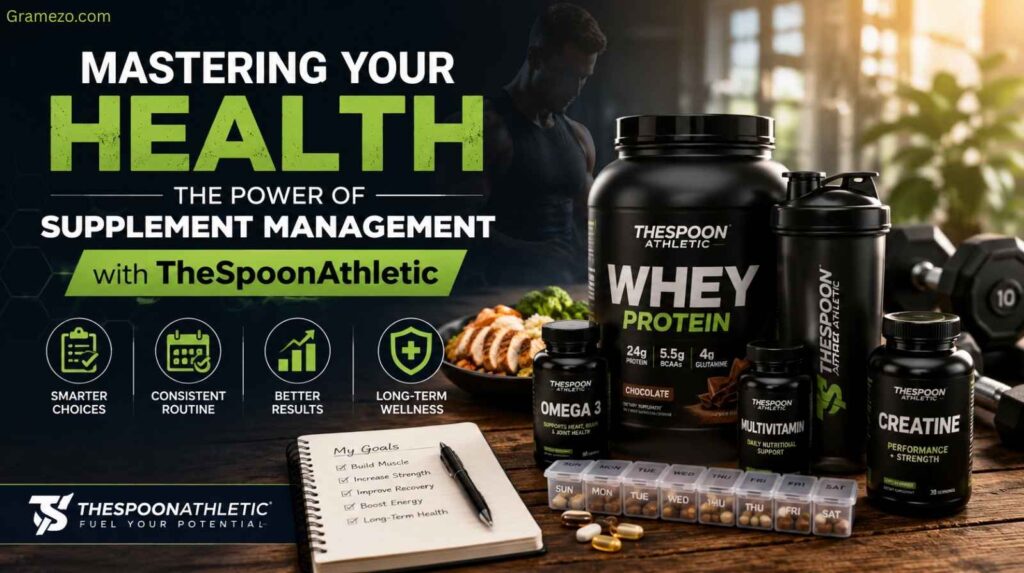
Modern health culture has created a strange problem.
People have access to more dietary supplements, health information, fitness apps, and nutrition advice than ever before. Yet many still struggle with low energy, poor recovery, inconsistent workout performance, and frustrating plateaus.
The issue often isn’t a lack of supplements.
It’s a lack of Supplement Management.
Walk into any supplement store or browse online marketplaces and you’ll see thousands of products promising better recovery, improved focus, faster muscle growth, enhanced endurance, stronger immunity, and optimal wellness. Many people buy several products, start taking them without a clear system, then wonder why they aren’t seeing meaningful results.
That’s where Supplement Management TheSpoonAthletic takes a different approach.
Rather than treating supplementation as a collection of random products, TheSpoonAthletic views it as a structured process built around science, personal goals, health data, and long-term sustainability.
A carefully designed supplement strategy can help support athletic performance, improve muscle recovery, address nutritional deficiencies, optimize recovery nutrition, and create a stronger foundation for overall wellness. However, success depends on choosing the right nutrients, taking them at the right time, using proper doses, and continuously evaluating results.
This guide explains how to build a complete supplement system that works in the real world.
Understanding Supplement Management in 2026
The supplement industry has evolved dramatically over the past decade.
Consumers are no longer satisfied with generic recommendations. Today’s athletes, fitness enthusiasts, and health-conscious individuals want precision. They want evidence. Most importantly, they want results.
Supplement Management is the process of organizing, planning, monitoring, and optimizing supplement use based on specific health and performance objectives.
Instead of asking:
“What supplements should I buy?”
A better question becomes:
“What nutrients does my body need to reach my goals?”
That subtle shift changes everything.
Many people develop a supplement habit based on marketing claims. They hear about a trending product, purchase it, and add it to an already crowded cabinet.
Over time, this creates overlapping ingredients, excessive dosing, wasted money, and inconsistent outcomes.
A structured supplement system avoids these problems by focusing on:
- Individual health goals
- Nutritional gaps
- Supplement quality
- Evidence-based dosing
- Timing strategies
- Progress tracking
- Long-term optimization
This is the foundation of structured supplement management.
Why Taking More Supplements Doesn’t Mean Better Results
One of the biggest misconceptions in sports nutrition is that more products automatically lead to better outcomes.
In reality, the opposite often happens.
Imagine a person taking:
- Two multivitamins
- Three recovery formulas
- Multiple pre-workout products
- Separate magnesium supplements
- Several protein blends
Without realizing it, they may consume overlapping nutrients several times daily.
This can create mineral imbalances, digestive issues, nutrient competition, and unnecessary expenses.
The goal isn’t maximum supplementation.
The goal is effective supplementation.
A carefully designed supplementation plan often produces better outcomes than an oversized collection of products.
The Difference Between Supplement Use and Supplement Strategy
Supplement use is reactive.
Supplement strategy is intentional.
Someone using supplements randomly may take whatever is trending online. Someone following a strategy understands why each product exists within their overall health framework.
That distinction separates casual users from people who consistently improve their health, performance, and recovery.
Why Supplement Management Matters More Than Ever
Modern lifestyles create challenges that previous generations rarely faced.
Long work hours, irregular schedules, processed foods, stress, poor sleep, and intense training demands can all influence nutritional status.
Even people who eat relatively well may experience nutrient shortfalls or micronutrient deficiencies.
This doesn’t mean everyone needs dozens of supplements.
It does mean nutritional support deserves careful attention.
Closing Nutritional Gaps
Many individuals fail to meet recommended intake levels for key nutrients.
Common areas of concern include:
- Vitamin D
- Magnesium
- Omega-3 fatty acids
- Zinc
- Protein intake
These nutrients influence everything from immune health to recovery and energy production.
A strategic supplementation approach helps address these deficiencies without unnecessary excess.
Supporting Athletic Performance
Whether someone trains for competition or simply wants better workouts, nutrition directly influences outcomes.
Proper nutrient support can assist with:
- Recovery capacity
- Exercise output
- Training adaptation
- Energy production
- Muscle repair
- Endurance improvement
This is why performance nutrition and supplement planning often go hand in hand.
Improving Recovery
Recovery is where progress actually occurs.
The workout provides the stimulus.
Recovery produces the adaptation.
Without adequate nutritional support, the body struggles to repair tissue, replenish nutrients, and prepare for future training sessions.
Effective recovery nutrition support can significantly improve long-term consistency.
The Five Pillars of Effective Supplement Management
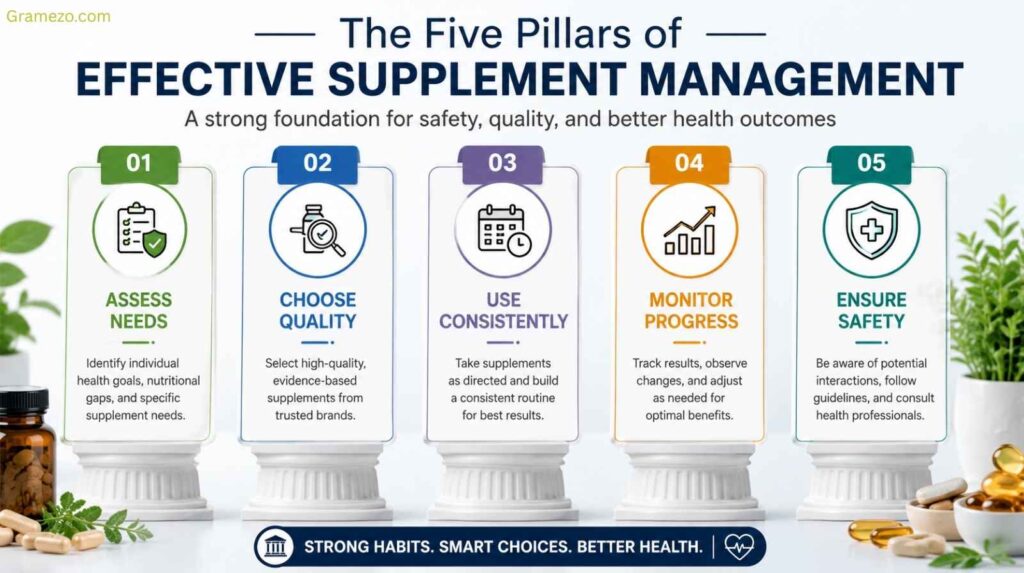
Every successful supplement program rests on five essential pillars.
Goal-Based Supplement Selection
Every supplement should solve a specific problem or support a defined objective.
Examples include:
| Goal | Potential Support |
|---|---|
| Muscle Growth | Protein, creatine |
| Endurance | Electrolytes, carbohydrates |
| Recovery | Magnesium, protein |
| Energy | Vitamin D, iron (when deficient) |
| Focus | Caffeine, targeted nootropics |
Supplements without a clear purpose rarely provide meaningful value.
Evidence-Based Decision Making
The supplement industry contains both excellent products and questionable claims.
Evidence-based supplementation prioritizes research over marketing.
Products supported by human clinical studies generally deserve greater attention than those relying solely on testimonials.
Correct Dosage Management
Even beneficial nutrients can become ineffective when dosing is inappropriate.
Too little may produce no measurable effect.
Too much can create safety concerns.
This is why supplement dosage management plays a critical role in any successful program.
Strategic Timing
Certain nutrients perform better when consumed at specific times.
Protein after training.
Magnesium before sleep.
Electrolytes around exercise sessions.
These timing adjustments can improve supplement absorption optimization and effectiveness.
Ongoing Monitoring
Health goals evolve.
Training changes.
Lifestyle demands shift.
A supplement plan should adapt accordingly.
Regular reviews ensure the system remains aligned with current needs.
TheSpoonAthletic’s Framework for Smarter Supplement Management
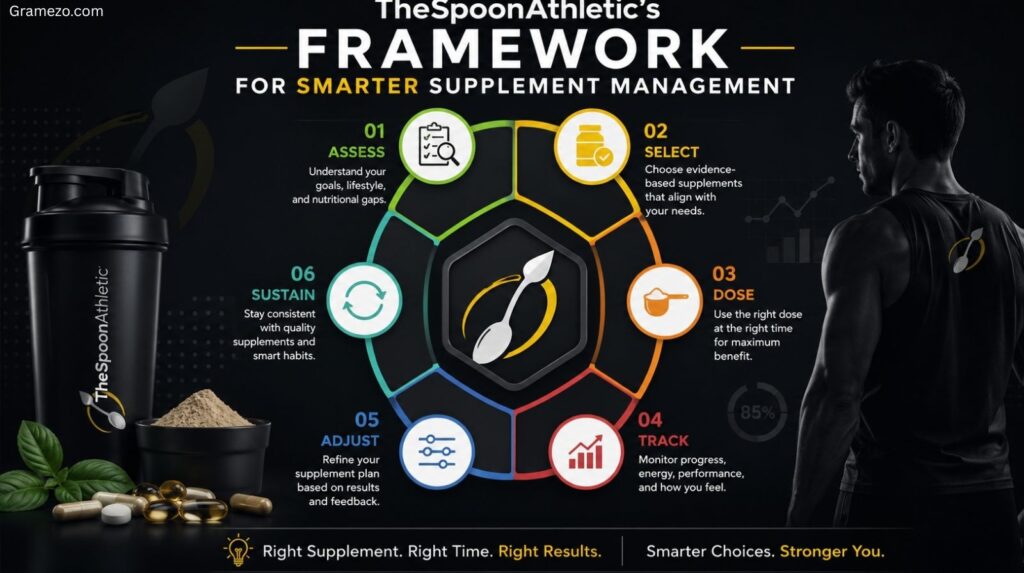
The core philosophy behind TheSpoonAthletic focuses on sustainable health improvement rather than quick fixes.
The framework emphasizes practical systems over supplement hype.
Assess Before You Supplement
Many people skip the assessment stage entirely.
They purchase products before evaluating:
- Diet quality
- Training demands
- Recovery habits
- Sleep patterns
- Existing deficiencies
- Health goals
This often leads to unnecessary supplementation.
A proper assessment identifies genuine needs first.
Prioritize Nutrition Fundamentals
Supplements support nutrition.
They do not replace it.
Someone eating highly processed foods while spending hundreds on supplements often sees disappointing results.
TheSpoonAthletic prioritizes:
- Whole foods
- Balanced meals
- Adequate protein
- Proper hydration
- Consistent meal patterns
Only after these foundations are established does supplementation become significantly more effective.
Build Around Individual Goals
A marathon runner and a powerlifter have different nutritional demands.
Likewise, someone focused on longevity requires a different strategy than someone preparing for competition.
This principle forms the basis of custom supplementation and targeted intake.
Measure Outcomes
Supplements should produce observable improvements.
Possible metrics include:
- Recovery quality
- Strength gains
- Energy levels
- Sleep quality
- Workout performance
- Biomarker changes
If a supplement delivers no measurable benefit after an appropriate trial period, it may not deserve a permanent place in the plan.
Identifying Your Health and Performance Goals

Goals determine everything.
Without them, supplement selection becomes guesswork.
Muscle Growth and Strength
Athletes pursuing hypertrophy typically prioritize:
- Protein intake
- Creatine support
- Recovery nutrition
- Caloric sufficiency
Their supplement strategy focuses on supporting training adaptations and muscle repair.
Endurance Performance
Endurance athletes face unique nutritional demands.
Long training sessions increase the importance of:
- Electrolytes
- Carbohydrates
- Hydration
- Recovery nutrients
These factors directly influence sports endurance and performance sustainability.
Recovery Optimization
Recovery-focused individuals often prioritize:
- Magnesium
- Protein
- Omega-3 fatty acids
- Sleep-supportive nutrition
The objective becomes reducing soreness and improving recovery speed.
Energy and Productivity
Many professionals seek better focus and sustained daily energy.
Nutritional support may involve addressing deficiencies that contribute to fatigue while improving overall wellness habits.
Longevity and Healthy Aging
Long-term wellness goals often emphasize:
- Cardiovascular health
- Cognitive function
- Bone health
- Immune resilience
This creates a different supplementation framework compared to performance-oriented strategies.
How to Audit Your Current Supplement Stack
Before building a better system, evaluate your existing one.
This process frequently reveals surprising inefficiencies.
Start by listing every supplement currently used.
Include:
- Multivitamins
- Protein powders
- Pre-workouts
- Recovery formulas
- Individual vitamins
- Minerals
- Herbal products
Next, review ingredient labels carefully.
Many consumers discover duplicate ingredients across multiple products.
For example, magnesium may appear in:
- Multivitamins
- Sleep supplements
- Recovery blends
- Standalone magnesium products
This overlap often goes unnoticed.
Questions to Ask During a Supplement Audit
- Why am I taking this?
- Does it support a specific goal?
- Is it evidence-based?
- Am I taking the correct amount?
- Have I noticed measurable benefits?
- Does another product already provide the same nutrient?
This simple evaluation often leads to a leaner and more effective supplement routine.
Foundational Supplements Most People Should Evaluate First
Before exploring advanced performance products, focus on foundational nutrients.
These typically deliver the highest return on investment.
Protein Supplements
Protein remains one of the most useful supplements available.
It supports:
- Muscle repair
- Recovery
- Satiety
- Strength development
For individuals struggling to meet protein targets through food alone, supplementation can be extremely valuable.
Protein powder isn’t magic.
It’s simply a convenient tool.
Used correctly, however, it can significantly improve consistency.
Vitamin D
Vitamin D influences numerous biological functions.
Research continues to explore its role in immune health, bone health, muscle function, and overall wellness.
People with limited sunlight exposure often benefit from evaluating their vitamin D status.
Magnesium
Magnesium participates in hundreds of physiological processes.
It contributes to:
- Muscle function
- Sleep quality
- Recovery
- Energy production
- Nervous system regulation
Despite its importance, magnesium intake remains inadequate for many individuals.
Omega-3 Fatty Acids
Omega-3 fats support overall health and recovery.
These essential fats play roles in:
- Cardiovascular health
- Brain function
- Inflammation management
- Recovery processes
For people who consume little fatty fish, supplementation may help support nutritional needs.
Electrolytes
Electrolytes become increasingly important for:
- Athletes
- Endurance trainers
- Individuals exercising in hot environments
Maintaining proper hydration status supports performance, recovery, and daily functioning.
Multivitamins
A high-quality multivitamin can help address potential nutrient gaps.
However, it should complement a balanced diet rather than replace one.
Multivitamins work best as part of a larger nutrition support system built around real food, healthy habits, and strategic supplementation.
Conclusion
The most successful health and fitness journeys rarely depend on a single supplement.
They depend on systems.
A carefully designed Supplement Management TheSpoonAthletic approach transforms supplementation from random product use into a structured framework built around science, personal goals, recovery, and long-term health optimization.
When you focus on evidence-based supplementation, monitor progress, prioritize nutrient quality, and align supplements with your individual objectives, every product becomes more purposeful. Instead of chasing trends, you create a sustainable strategy that supports performance, wellness, and recovery for years to come.
The strongest supplement routine isn’t the largest one.
It’s the one that consistently delivers measurable results while supporting your overall health journey.
Discover More Articles
- Do Cadillac Lyriq Driving Modes Change Range Or Battery Usage? Complete 2026 Guide To Real-World EV Efficiency
- Tubefalire Explained: The Real Causes Behind Digital Failures And How To Prevent System Breakdown In Modern Workflows
- TheLaptopAdviser Expert Gaming Reviews 2026: Real Performance Or Just Hype? (Complete Guide)
- URL Encoder Spell Mistake: The Complete Guide To Fixing Encoding Errors, Broken URLs, And Hidden System Failures
Read more knowledgeable blogs on meezvo.com

Kiara Connah is an expert blogger focused on Grammar Guides and Grammar Tips, providing clear explanations, practical examples, and easy-to-follow advice to help writers, students, and professionals improve accuracy, clarity, and confidence in their writing.