Work has changed faster in the last decade than it did in the previous fifty years. Teams no longer sit in one office. People collaborate across Jakarta, Manila, Ho Chi Minh City, and beyond. A FinTech Company like Xendit operates in a high-speed environment where every decision impacts real-time financial transactions. That pressure creates a challenge most companies struggle with how do you keep people motivated when everything feels fast, distributed, and constantly shifting?
Traditional Employee Engagement programs used to rely on annual surveys, occasional team lunches, and performance bonuses. That worked once. But today, it feels slow, disconnected, and predictable.
Employees want something different now. They want interaction, meaning, progress they can see, and recognition that feels immediate.
That is where the idea of Xendit Gamification Summit Work emerged. It didn’t just improve engagement. It reshaped how people experience work itself.
Instead of treating engagement as a static HR initiative, Xendit turned it into a living system powered by Workplace Gamification, behavioral science, and real-time feedback loops.
And honestly, that changed everything.
What Is Xendit Gamification Summit Work?
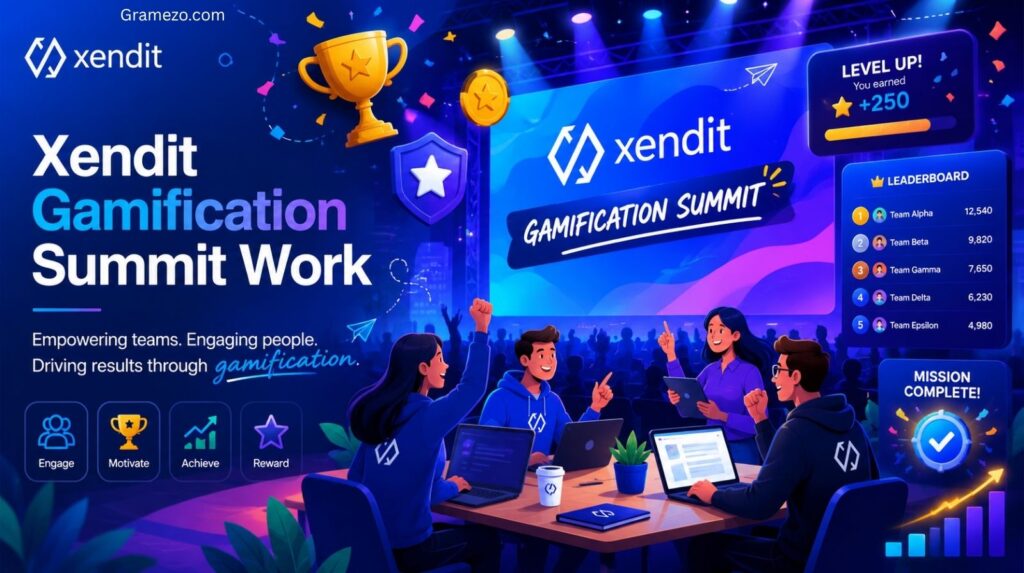
At its core, Xendit Gamification Summit Work is an internal engagement ecosystem designed to transform everyday tasks into meaningful, interactive experiences.
But here’s the key idea you’re not “playing games at work.” You’re experiencing work through Gamification Mechanics that reinforce productivity, collaboration, and learning.
This system blends:
- Employee Experience Management
- Corporate Gamification
- Digital Workplace Culture
- Performance Tracking
- AI-Powered Recommendations
Instead of passive participation, employees actively engage in Collaborative Quests, complete Smart Challenges, and earn Achievement Badges tied to real work outcomes.
Think of it like this.
If traditional engagement is a yearly gym membership you rarely use, gamification is a personal trainer who nudges you every day and shows your progress in real time.
The Employee Engagement Problem Xendit Needed to Solve
Before building anything, Xendit had to confront a harsh reality. The old engagement systems weren’t just ineffective. They were breaking down.
Declining participation in traditional programs
Employees ignored surveys. Feedback forms went unanswered. Even well-designed programs saw low Participation Rate.
The issue wasn’t effort. It was relevance.
Engagement fatigue in fast-paced teams
In a Hybrid Work Environment, employees already juggle meetings, Slack messages, and deadlines. Adding “extra HR activities” felt like noise.
Lack of emotional connection in distributed teams
Remote collaboration across Southeast Asia created distance. Teams worked together but didn’t always feel connected.
Motivation gaps in high-performance environments
In fintech, pressure is constant. Without strong reinforcement systems, burnout increases and Employee Motivation drops.
So Xendit didn’t ask, “How do we improve engagement?”
They asked, “How do we redesign the experience of work itself?”
That question led to something far more powerful than a typical HR initiative.
The Vision Behind the Gamification Summit
The goal wasn’t to entertain employees. It was to create a Workplace Engagement Framework that felt natural, meaningful, and scalable.
The vision focused on three pillars:
First, build a sense of Workplace Belonging. People needed to feel like they were part of something bigger than their daily tasks.
Second, improve Team Collaboration across departments without forcing it.
Third, turn progress into something visible through Performance Dashboard systems that showed real-time contributions.
Instead of telling employees they mattered, Xendit wanted to show it continuously.
That shift sounds simple, but it required deep changes in design thinking and technology.
Understanding the Behavioral Psychology Behind Gamification
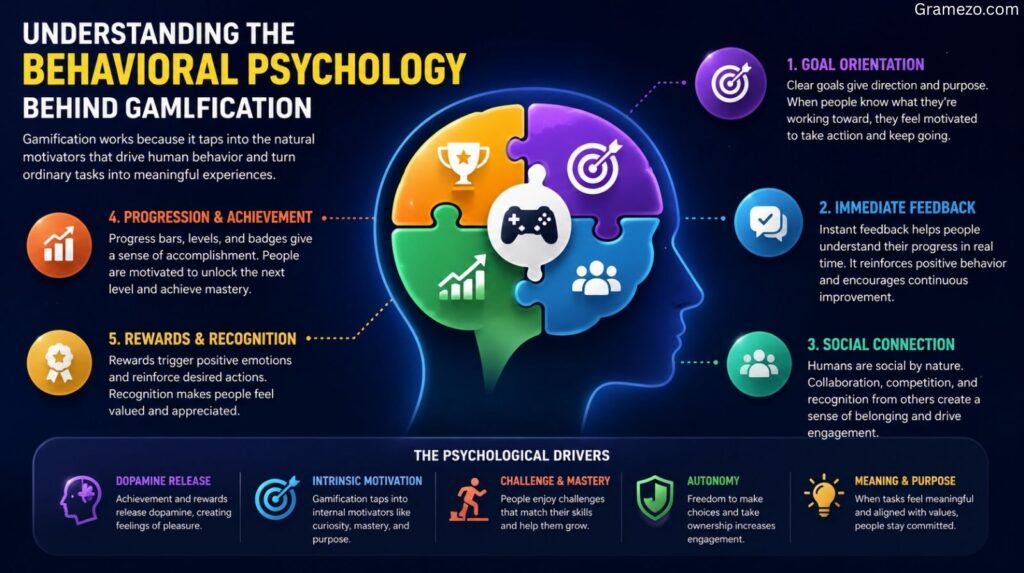
To understand why this system worked, you need to look at Behavioral Psychology.
Humans respond strongly to three triggers:
- Immediate feedback
- Visible progress
- Social recognition
Traditional work environments delay all three. Gamification brings them into real time.
This is where Engagement Psychology becomes critical. People stay motivated when:
- They see progress instantly
- They feel their work contributes to something bigger
- They receive recognition from peers
Xendit built its system around these principles.
Instead of forcing behavior, it reinforced it naturally using Behavioral Reinforcement loops.
For example, completing a learning module didn’t just mark “done.” It triggered:
- A badge
- A progress update
- A team notification
- A leaderboard change
That instant feedback created momentum.
And momentum creates consistency.
Core Components of the Gamification Framework
The Gamification Framework inside Xendit wasn’t random. It followed structured layers that aligned with real work behavior.
Daily Wins
Small tasks that created momentum. These included quick collaboration actions, micro-learning, and task completion tracking.
Collaborative Quests
Cross-functional missions where teams worked together. These improved Cross-Team Collaboration and reduced silos.
Smart Challenges
Adaptive tasks generated through AI-Powered Recommendations. These matched employee skill level and role.
Progression System
A leveling structure that reflected contribution, learning, and participation.
Achievement Badges
Visible recognition tied to meaningful actions. Not vanity metrics.
Seasonal Leaderboards
Friendly competition cycles that reset periodically to maintain freshness.
Each component worked together like a connected ecosystem.
How the Progression System Worked
The Progression System turned engagement into a journey.
Employees earned points through:
- Learning sessions
- Collaborative tasks
- Mentorship participation
- Project contributions
But points alone weren’t the goal.
Instead, the system focused on Personalized Milestone Tracking.
Employees didn’t just “level up.” They unlocked:
- New challenges
- Peer recognition opportunities
- Leadership visibility
This created a strong sense of Employee Progress Tracking and long-term motivation.
Designing an Experience Employees Actually Wanted
Here’s where many companies fail. They design engagement systems that feel forced.
Xendit avoided that by focusing on Human-Centered Design.
Participation was optional. But the experience made participation rewarding.
They reduced friction by:
- Integrating with Slack
- Using cloud-based dashboards
- Keeping interactions lightweight
They also ensured fairness across roles. Engineers, HR staff, and operations teams all had different challenge paths.
This prevented burnout and maintained Employee Satisfaction across diverse teams.
The Technology Stack Behind the Experience
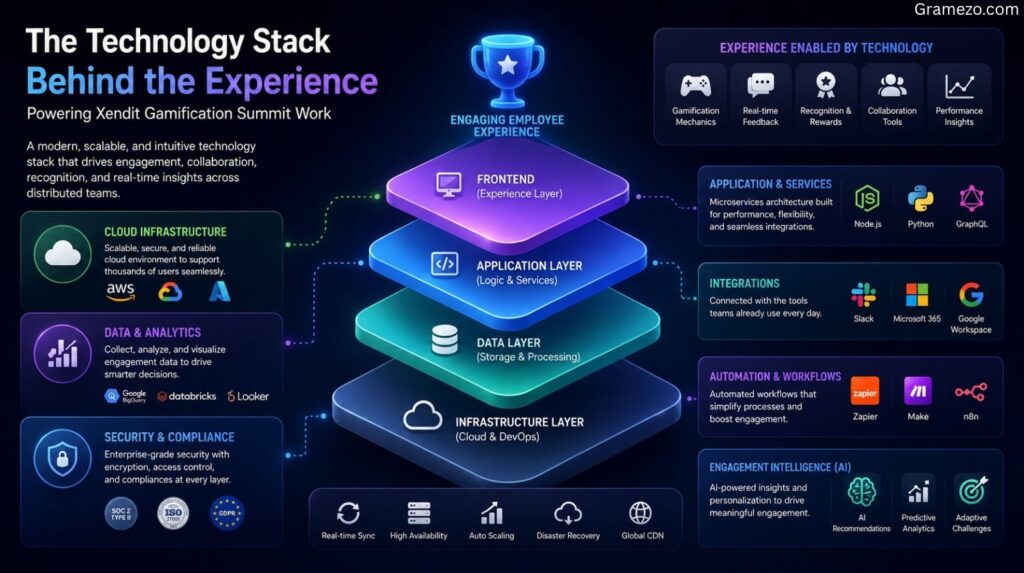
Behind the scenes, this system relied heavily on modern Workplace Technology.
It included:
- Cloud-Based Systems for scalability
- Workflow Automation for task tracking
- Real-time analytics dashboards
- Integration with internal productivity tools
The real backbone was data.
Data Analytics powered every decision. It tracked:
- Participation trends
- Engagement spikes
- Drop-off points
- Collaboration frequency
This allowed the system to evolve continuously.
Step-by-Step Rollout Strategy
Xendit didn’t launch everything at once. That would have failed.
Instead, they followed a phased rollout:
First came internal research. Then pilot testing in select teams. After that, a controlled company-wide rollout.
Feedback loops were constant. Employees shaped the system as it evolved.
That created trust.
And trust is what turns tools into culture.
Leadership’s Role in Making It Work
No engagement system survives without leadership.
Managers actively participated. Executives used the system publicly.
That visibility mattered.
When leaders joined Collaborative Quests, employees followed.
This reinforced a strong Organizational Culture built on participation, not hierarchy.
How AI Personalization Changed Everything
One of the most powerful layers was AI Personalization.
The system used AI-Powered Recommendations to:
- Suggest relevant challenges
- Adapt learning paths
- Predict engagement drop-offs
This created Adaptive Learning Paths tailored to each employee.
Instead of forcing everyone into the same experience, AI shaped the journey individually.
That’s where engagement became truly scalable.
Measuring Success: What Actually Mattered
Xendit didn’t rely on vanity metrics.
They tracked meaningful indicators:
- Employee Net Promoter Score (eNPS)
- Participation Rate
- Retention Rate
- Productivity Metrics
- Cross-functional engagement
They also monitored emotional signals like workplace sentiment.
The biggest win wasn’t just numbers.
It was consistency.
People stayed engaged longer.
Real Impact of the Program
The results showed up in subtle but powerful ways.
Teams collaborated more naturally. Learning became part of daily work. Recognition wasn’t delayed it was immediate.
Employees reported stronger Employee Happiness and improved Workplace Joy.
More importantly, burnout decreased.
That’s rare in fintech environments where pressure is constant.
Challenges During Implementation
No system like this works perfectly from day one.
Xendit faced real challenges:
- Avoiding over-reliance on rewards
- Preventing leaderboard fatigue
- Ensuring fairness across teams
- Maintaining long-term engagement
The biggest challenge was sustainability.
Early excitement fades quickly if systems don’t evolve.
So they continuously updated challenges and improved personalization.
Sustaining Long-Term Engagement
Sustainability came from variety.
New Smart Challenges were introduced regularly. Seasonal updates kept the system fresh.
Feedback became a core feature, not an afterthought.
Employees didn’t just use the system.
They shaped it.
That’s the difference between a tool and an ecosystem.
Lessons Other Companies Can Learn
Several insights stand out:
Focus on behavior, not rewards.
Build collaboration, not competition.
Use Employee Experience Management as a core strategy, not an HR add-on.
Let data guide improvements.
Most importantly, design for humans not systems.
Common Mistakes in Workplace Gamification
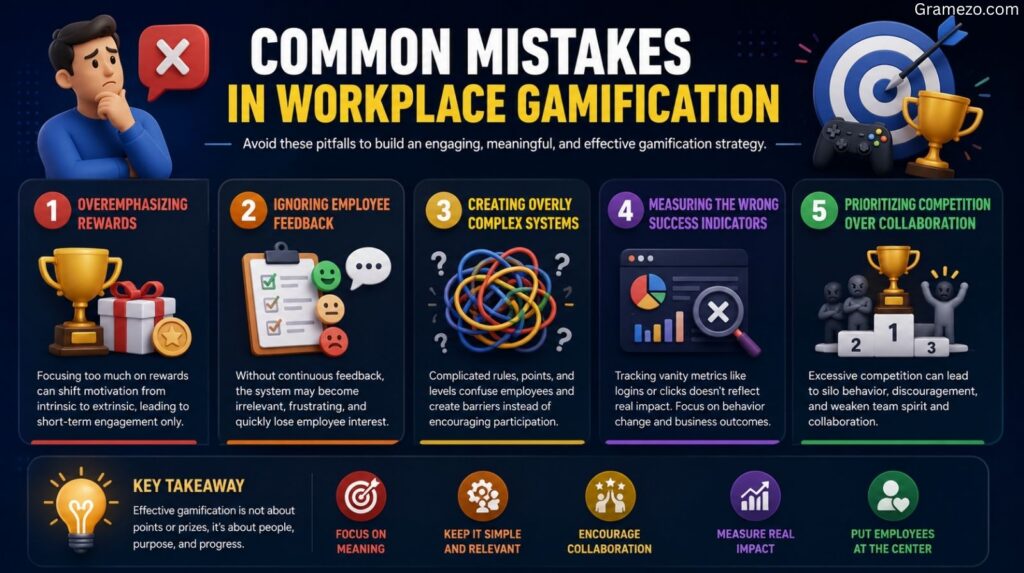
Many companies fail because they:
- Over-gamify everything
- Focus too much on points
- Ignore feedback loops
- Don’t align with real work outcomes
Gamification only works when it reflects real value creation.
Otherwise, it becomes noise.
The Future of Workplace Gamification
The future is already forming.
We’re moving toward:
- Predictive engagement systems
- AI-driven employee journeys
- Real-time performance ecosystems
- Fully adaptive work environments
In this future, engagement won’t be a program.
It will be part of the operating system of work.
Final Thoughts
The Xendit Gamification Summit Work initiative shows what happens when companies rethink engagement from the ground up.
Instead of forcing participation, it designed experiences people actually wanted to join.
It combined Behavioral Psychology, Artificial Intelligence, and Workplace Innovation into one unified system.
And it proved something important.
Work doesn’t have to feel like work.
When designed well, it can feel like progress, connection, and meaning happening in real time.
Discover More Articles
- Truzio Explained: The Smartest Way To Drive Digital Transformation And Business Growth In 2026
- Coolkingzone com: Why This Multi-Topic Digital Platform Is Quietly Dominating Online Attention
- Best Wireless Earbuds Under $200 In 2024: Premium Sound Without Premium Pricing
Read more knowledgeable blogs on meezvo.com

Kiara Connah is an expert blogger focused on Grammar Guides and Grammar Tips, providing clear explanations, practical examples, and easy-to-follow advice to help writers, students, and professionals improve accuracy, clarity, and confidence in their writing.