
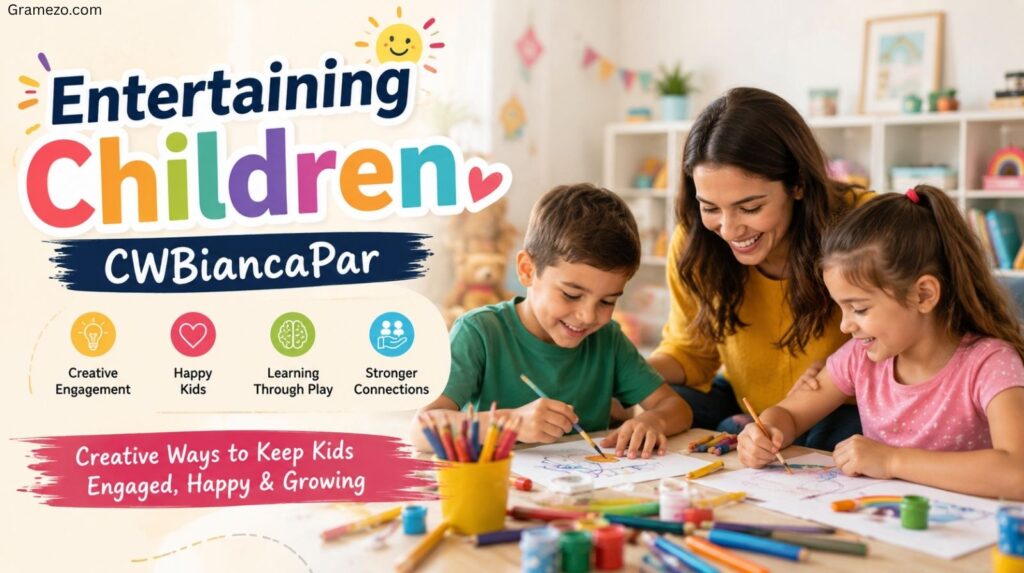
If you’ve ever looked at your child and thought, “I’ve run out of ideas again”, you’re not alone. Modern parenting feels different. Faster. Louder. More distracting. Kids have endless options for entertainment, yet they still get bored within minutes.
That’s where the idea of Entertaining Children CWBiancaParenting steps in. It doesn’t treat boredom like a problem to fix instantly. Instead, it treats it like a doorway into creativity, connection, and real growth.
This guide goes deep into creative ways to keep kids engaged, but not in a “buy more toys” way. You’ll learn how to turn everyday life into meaningful play, how to balance screens without conflict, and how to build a home where learning feels natural instead of forced.
Let’s break it down in a way that actually works in real life.
Why Keeping Kids Engaged Feels Harder in Today’s World
Parenting has always been challenging, but today brings a different kind of pressure. Kids don’t just compete with siblings or neighborhood friends anymore. They compete with endless digital stimulation.
Short videos, fast games, and constant notifications train the brain to expect quick rewards. That leads to attention span reduction and what experts often call digital overstimulation. Kids get used to instant excitement, so slower activities suddenly feel “boring.”
But here’s the twist. Boredom isn’t the enemy. It’s actually the starting point of creativity.
When kids don’t have constant input, their brains shift gears. They start imagining, experimenting, and creating. That’s where real creativity development in kids begins.
On the parent side, things feel just as intense. Work stress, household tasks, and limited time make it harder to constantly “entertain” children. But here’s the truth most people miss:
You don’t need to entertain kids all the time. You need to guide their engagement.
That’s a completely different mindset.
What Entertaining Children CWBiancaParenting Really Means
The CWBiancaParenting system is not about keeping kids busy every second. It focuses on intentional parenting approach strategies that turn ordinary life into meaningful interaction.
Instead of thinking:
“What can I do to entertain my child right now?”
You start thinking:
“How can I turn this moment into connection or learning?”
That shift changes everything.
At its core, Entertaining Children CWBiancaParenting blends three things:
- Emotional bonding during daily life
- Play-based learning instead of forced instruction
- Balanced independence for the child
It’s not rigid. It’s flexible. And that’s what makes it realistic for modern families.
Key Principles of CWBiancaParenting
Let’s simplify the philosophy so you can actually use it:
1. Connection first, structure second
Kids engage more when they feel emotionally safe and connected.
2. Learning hides inside play
You don’t need formal lessons for everything. Kids learn best through experiential learning.
3. Balance matters more than perfection
Some days are structured. Some days are messy. Both are okay.
4. Boredom is allowed
Because boredom as creativity trigger is real.
The Science of Play and Why It Shapes Everything
Here’s something fascinating: play isn’t just fun. It physically shapes the brain.
Research in Child Development shows that play strengthens neural connections, especially in early years. These connections support thinking, memory, and emotional control.
When kids engage in play-based learning, they don’t just “pass time.” They build real cognitive and emotional skills.
This includes:
- Cognitive development in kids
- Language development
- Problem-solving skills
- Emotional intelligence in children
So when a child builds a pillow fort or acts out a story, their brain is doing serious work behind the scenes.
Structured vs Unstructured Play: What Actually Works?
Both types matter, but they do different jobs.
Structured play feels more guided. Think puzzles, board games, or learning apps. It builds focus and discipline.
Unstructured play is free and open. Think make-believe games or random storytelling. It boosts imagination and independence.
A simple comparison helps:
| Type | What It Builds | Example |
|---|---|---|
| Structured Play | Focus, discipline | Board games, puzzles |
| Unstructured Play | Creativity, independence | Pretend play, storytelling |
A healthy childhood needs both. Not one or the other.
Intentional Play: Turning Daily Life Into Learning
Here’s where things get practical.
You don’t need special tools for intentional play activities for kids. You already have everything you need inside your home.
Everyday Activities That Teach Without Pressure
Cooking becomes math.
Grocery shopping becomes decision-making.
Cleaning becomes responsibility training.
For example, when you cook with your child, you’re not just making food. You’re teaching:
- Measurement (math skills)
- Following steps (problem-solving skills)
- Patience (emotional control)
This is learning through everyday activities, and it works better than most formal lessons.
A Simple Example of Intentional Play
Let’s say you’re folding laundry.
Instead of rushing through it alone, turn it into a sorting game:
- Sort clothes by color
- Ask your child to find matching socks
- Turn it into a timed challenge
Now you’ve turned a boring chore into interactive learning for kids.
No extra cost. No extra setup. Just intention.
Indoor Activities for Children That Actually Work
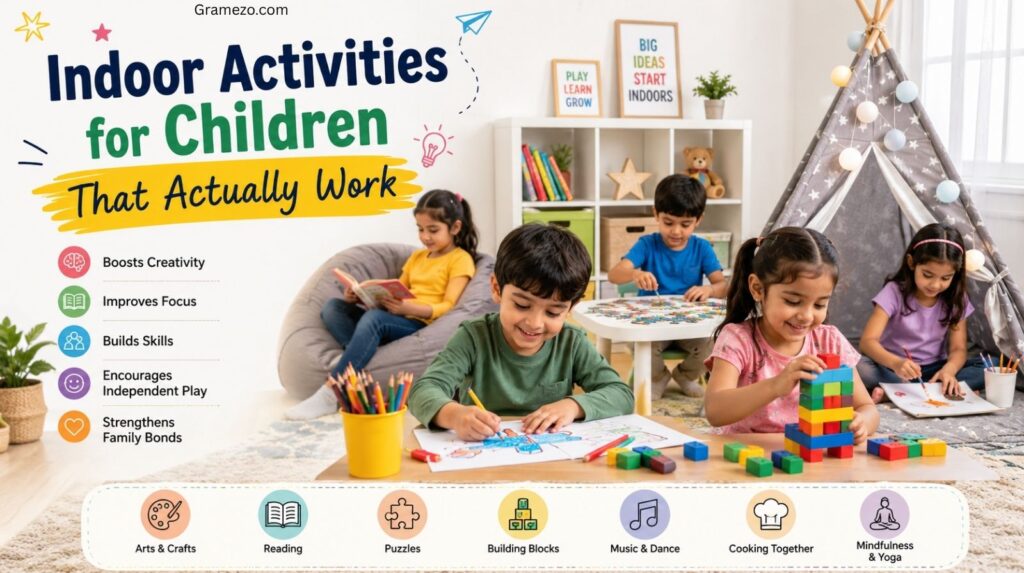
Not every day allows outdoor play. That’s where smart indoor strategies help.
Creative Arts and Crafts for Kids
Arts and crafts build creativity development in kids in a powerful way. But you don’t need fancy supplies.
Paper, crayons, and recycled materials work perfectly.
Let kids:
- Design imaginary creatures
- Build simple paper worlds
- Create greeting cards for family members
This strengthens both imagination and focus.
Imagination Games and Storytelling
Storytelling is one of the strongest tools for language development through storytelling.
Try this:
Start a story with one sentence. Then let your child continue it. You’ll be surprised where it goes.
It builds:
- Vocabulary
- Confidence
- Emotional expression
Quiet Yet Engaging Activities
Some kids don’t always want loud play. That’s okay.
Try:
- Puzzle solving for brain development
- Building blocks
- Drawing challenges
These calm activities still support cognitive skill building activities without overstimulation.
Adswynk com Explained: Real Features, Earning Claims, Risks, And What It Actually Does In 2026
Outdoor Activities for Kids That Build Confidence and Energy
Outdoor play resets everything. It clears mental clutter and improves focus.
Kids naturally develop physical activity for children skills when they move freely.
Nature Exploration and Garden Play
Take a simple walk outside and turn it into a scavenger hunt:
- Find three different leaves
- Spot insects or birds
- Collect natural objects
This supports outdoor learning activities and builds curiosity.
Movement-Based Play That Burns Energy
You don’t need a playground.
You can create one at home:
- Jumping challenges
- Homemade obstacle courses
- Relay races
These activities improve coordination and confidence.
Family Outdoor Games
Games like catch, cricket, or simple tag build family bonding activities for kids naturally.
No pressure. Just shared fun.
Learning Through Play Without Making It Feel Like School
Kids resist anything that feels like forced learning. So don’t present it that way.
Instead, use gamification in education.
Turn math into scoring games. Turn reading into roleplay. Turn spelling into challenges.
For example:
- Each correct answer earns points
- Points unlock small privileges
This keeps motivation high without pressure.
Smart Screen Time Management for Children
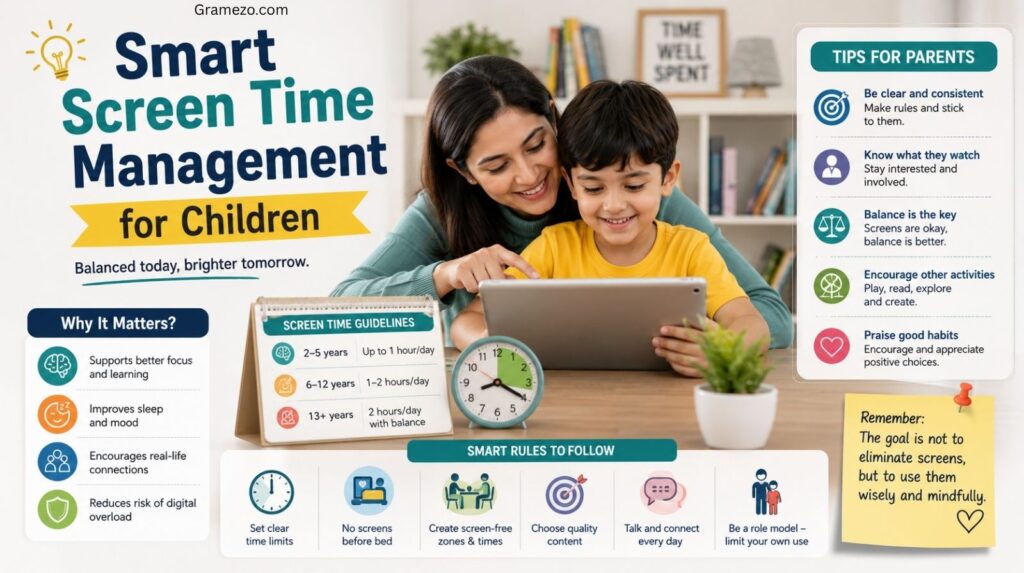
Screens aren’t the enemy. Uncontrolled use is.
The goal is screen time management for children, not elimination.
Passive vs Active Screen Use
Passive use means watching videos without interaction.
Active use means learning apps, drawing tools, or problem-solving games.
Active use supports interactive learning, while passive use often leads to overstimulation.
Building a Healthy Digital Balance
A simple rule works well:
Balance screen time with real-world activity.
If your child spends one hour on screens, they should also spend time in:
- Physical movement
- Creative play
- Social interaction
This creates a digital balance framework that feels natural, not strict.
Encouraging Real Engagement Without Forcing It
Kids don’t engage well when they feel controlled. They engage when they feel involved.
Try this instead of commands:
- Offer choices
- Join their play instead of watching
- Rotate activities often
This improves parent-child interaction naturally.
Family Bonding Activities That Actually Stick
Strong families don’t always need big events. Small shared moments matter more.
Cook together. Play together. Talk during activities.
These simple routines strengthen emotional bonding and trust.
Even a 20-minute game night builds stronger connection than hours of passive time together.
A Simple 2-Day Activity Plan for Real Life
Here’s a realistic rhythm you can follow:
- Day 1: Indoor creativity (drawing or crafts)
- Day 2: Outdoor exploration
- Day 3: Storytelling game
- Day 4: Cooking together
- Day 5: Physical movement games
- Day 6: Puzzle or building activities
- Day 7: Family game night
No pressure. No perfection. Just flow.
Common Parenting Mistakes That Lower Engagement
Most parents don’t fail because they don’t care. They struggle because they try too hard.
Some common issues:
- Overusing screens as a shortcut
- Over-scheduling every moment
- Giving too many instructions
The fix is simple:
Step back. Guide lightly. Let kids explore more.
What Research Says About Child Engagement
Studies in Child Development consistently show one thing:
Kids learn best when they actively participate, not when they passively receive information.
That’s why free play activities matter so much. They allow children to think, fail, adjust, and try again.
Final Thoughts: Raising Engaged, Curious, and Happy Kids
At the heart of Entertaining Children CWBiancaParenting, one idea stands out:
You don’t need to entertain your child every second.
You need to create space where they can explore, imagine, and connect.
When you shift from “keeping kids busy” to “helping kids engage,” everything changes. Less stress. More connection. More real growth.
And honestly, that’s what parenting should feel like. Not perfect. Just meaningful.
Discover More Articles
- 42 Dugg Height: The Real Measurement, Internet Obsession, And Why Fans Can’t Stop Searching
- Do Cadillac Lyriq Driving Modes Change Range Or Battery Usage? Complete 2026 Guide To Real-World EV Efficiency
- TheLaptopAdviser Expert Gaming Reviews 2026: Real Performance Or Just Hype? (Complete Guide)
- Best Ensalada De Garbanzos Near Me: The Ultimate Guide To Finding Fresh, Flavor-Packed Chickpea Salad Anywhere
Read more knowledgeable blogs on meezvo.com

Kiara Connah is an expert blogger focused on Grammar Guides and Grammar Tips, providing clear explanations, practical examples, and easy-to-follow advice to help writers, students, and professionals improve accuracy, clarity, and confidence in their writing.