
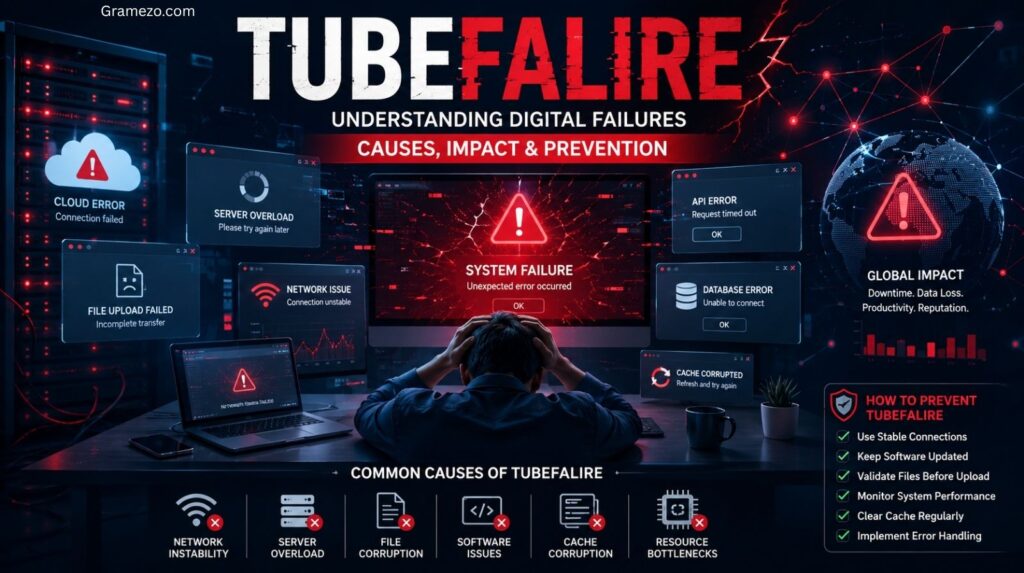
Digital systems feel invisible when everything works. You click, upload, sync, and move on without thinking twice. But the moment something breaks, the whole experience collapses fast. A file gets stuck at 92%. A dashboard freezes. An API call times out with no warning.
That sudden collapse is what many people now describe as Tubefalire a modern way of explaining cascading digital failures across systems, apps, and cloud platforms.
It’s not just a glitch. It’s usually a chain reaction of smaller issues that stack up until the entire process falls apart.
Let’s break it down in a practical, real-world way so you understand not just what happens, but why it happens and how you can stop it before it ruins your workflow.
What “Tubefalire” Really Means in Modern Digital Systems
At its core, Tubefalire refers to a system failure chain where one small issue triggers a wider breakdown across connected components.
Think of it like a water pipeline. One crack might seem harmless at first. But pressure builds. Flow becomes unstable. Eventually, the entire pipeline fails.
That’s exactly how modern digital systems behave.
Instead of one isolated error, you get a full workflow interruption caused by multiple connected weak points:
- A slow server response
- A dropped network packet
- A corrupted cache file
- A timeout in an API request
Individually, these don’t always break things. But together, they create a full digital breakdown.
What makes Tubefalire tricky is that it often looks random. One moment everything works. The next, nothing does.
But under the surface, there’s always a pattern.
Why Tubefalire Happens More Often in 2026 Than Before
Digital systems today are faster, smarter, and more connected than ever. But that complexity comes at a cost.
Modern apps don’t run in isolation anymore. They depend on:
- Cloud servers
- External APIs
- Real-time databases
- Background sync services
- Distributed systems
Each dependency adds another potential failure point.
So when something goes wrong, it rarely stays local. It spreads.
For example, a simple server overload in one region can trigger:
- Slow API responses globally
- Failed uploads
- Delayed processing
- User-side timeouts
This is why cloud system failure and backend congestion are becoming more noticeable.
Another big reason is data intensity. We now move massive files, high-resolution media, and constant real-time updates. That increases:
- Network instability
- Processing delay
- System bottlenecks
In short, we’re pushing systems harder than ever before.
The Core Technical Causes Behind Tubefalire
Most Tubefalire cases come down to a handful of technical issues. Let’s go through them in a practical way.
Network Instability and Packet Loss
Your internet connection might look fine, but even small interruptions matter.
A tiny packet loss during upload can break the entire transfer. The system waits for missing data, retries, and eventually fails.
This leads to:
- Upload error
- Request timeout
- Transmission failure
It feels sudden, but it usually starts with micro-disruptions in your connection.
Server Overload and Backend Congestion
When too many users hit a system at once, servers struggle to keep up.
This creates a queue. Requests pile up. Response time slows down. Eventually, the system starts rejecting new tasks.
That’s when you see classic server overload issues.
It often shows up as:
- Slow dashboards
- Failed logins
- Interrupted uploads
The key point here is simple: the system isn’t broken. It’s overwhelmed.
File Corruption and Data Integrity Issues
One of the most frustrating causes of Tubefalire is data corruption.
This happens when a file:
- Doesn’t fully upload
- Gets interrupted mid-transfer
- Loses structure during encoding
The result is an unusable or partially broken file.
You’ll often see:
- Missing content
- Broken media playback
- Failed imports
Even a tiny disruption can ruin the entire file integrity chain.
Software Compatibility Issues
Modern systems evolve fast. But not everything updates at the same speed.
A mismatch between versions can create silent failure points:
- Old API calling new endpoints
- Deprecated functions still in use
- Plugin conflicts
This leads to software compatibility issues that don’t always show visible errors. Instead, things just stop working.
Cache Corruption and Temporary Data Failures
Cache is supposed to make things faster. But when it breaks, it creates confusion.
A corrupted cache can:
- Load outdated data
- Block fresh updates
- Trigger repeated errors
That’s why clearing cache often fixes random issues instantly. It removes broken temporary data that keeps causing processing delay loops.
Resource Bottlenecks on Local Devices
Sometimes the problem isn’t the internet or server. It’s your own device.
When CPU, RAM, or disk usage spikes, everything slows down.
You might see:
- Frozen uploads
- Delayed responses
- Application crashes
This is a classic system bottleneck caused by memory usage problems or background processes eating resources.
Hidden Causes Most People Miss
Some Tubefalire cases look random but come from deeper technical layers.
DNS and Routing Issues
If your DNS sends requests to the wrong server, everything fails silently.
You won’t always see an error. The system just won’t respond correctly.
Firewall and Security Restrictions
Corporate or local security tools can block:
- API requests
- File transfers
- Authentication calls
This creates invisible automation breakdown scenarios where nothing works but no clear error appears.
Race Conditions in Distributed Systems
In distributed systems, timing matters.
If two processes compete for the same data at the wrong time, one fails.
This leads to inconsistent behavior that feels unpredictable.
Early Warning Signs Before Tubefalire Happens
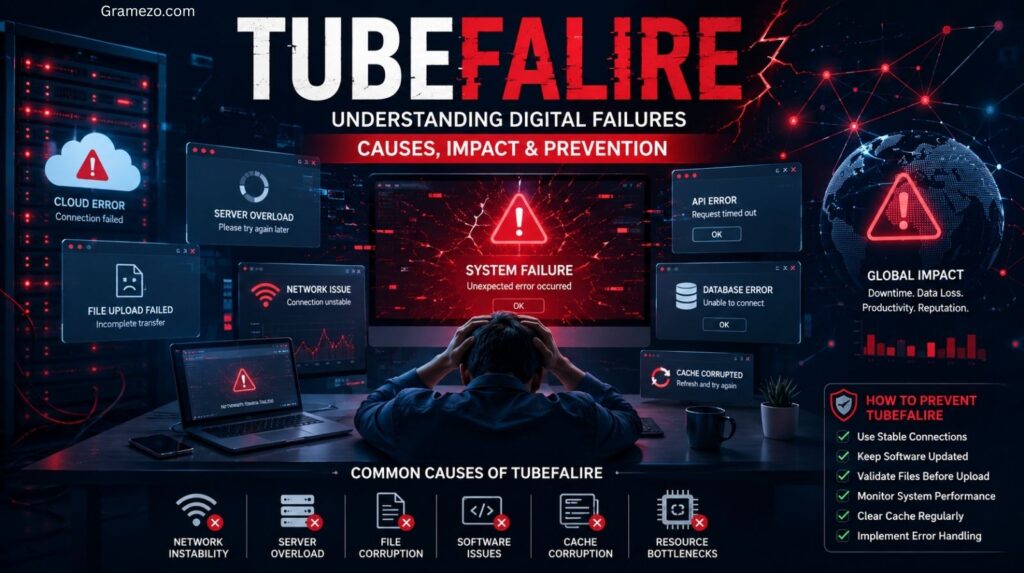
Tubefalire rarely appears out of nowhere. There are warning signals if you know what to look for:
- Uploads slowing down near the end
- Intermittent retries
- Partial loading of dashboards
- Random timeout spikes
- Sudden lag in otherwise stable systems
These are early signs of system instability and performance issues building up.
If you ignore them, they usually escalate into full failure.
Real Impact of Tubefalire on Work and Productivity
When Tubefalire hits, it doesn’t just break systems. It breaks momentum.
Workflow Disruption and Productivity Loss
Imagine working on a project for hours, then losing progress due to a failed upload. That’s not just technical failure. That’s lost time and focus.
It leads to:
- Context switching
- Rework cycles
- Task repetition
This is where workflow interruption becomes a real business problem.
User Experience Damage
Users don’t care why something failed. They care that it failed.
Repeated issues create frustration and eventually lead to abandonment.
That’s how digital breakdowns affect trust.
How to Diagnose Tubefalire Step by Step
Fixing Tubefalire requires a structured approach.
Start simple:
First, check your network. Run a stability test and look for packet loss.
Next, isolate the client. Try another browser or device.
Then check the platform. Look for outages or API issues.
Finally, reproduce the problem. If it always breaks at the same point, you’ve found your trigger.
This is basic root cause analysis, but it works.
Troubleshooting Framework for Real-World Use
A simple way to think about Tubefalire:
| Symptom | Likely Cause | Fix |
|---|---|---|
| Upload fails near end | Packet loss | Retry on stable network |
| App freezes | Memory overload | Close background apps |
| API timeout | Server overload | Retry with delay |
| Broken file | Data corruption | Re-upload with validation |
This approach helps you isolate system failure faster.
When the Problem Is Deeper Than Expected
Sometimes, Tubefalire isn’t software-related at all.
Hardware Failures
A failing disk or unstable memory can cause random errors that look like software bugs.
Operating System Corruption
Broken system files can interrupt normal execution and create persistent failures across apps.
At this point, troubleshooting becomes more complex and requires system-level diagnostics.
How to Prevent Tubefalire Before It Happens
Prevention always beats recovery.
Start with network stability. Use reliable connections for large transfers.
Validate files before uploading. Don’t send corrupted or incomplete data.
Keep software updated. Compatibility issues are one of the biggest hidden triggers.
Manage your system resources. Heavy background apps often cause silent failures.
And don’t forget cache maintenance. Temporary data buildup is a quiet troublemaker.
These small habits reduce most digital failures before they start.
How Organizations Prevent Repeat Failures
Teams don’t rely on luck. They use systems:
- Monitoring tools for real-time detection
- Logging for error tracing
- Load balancing for traffic distribution
- Standard validation pipelines
This reduces backend congestion and improves reliability across workflows.
The Developer’s Role in Preventing Tubefalire
Developers shape how resilient a system becomes.
Good systems include:
- Strong input validation
- Clear error messages
- Built-in retry logic
- Graceful degradation during failures
Without these, even small issues turn into full automation breakdown scenarios.
Performance Testing and Why It Matters
Before launch, systems should be tested under stress.
Why? Because real-world usage is messy.
Stress testing exposes:
- Bottlenecks
- Memory leaks
- Queue congestion
- API limits
It’s one of the most effective ways to prevent future system overload issues.
Security Systems That Accidentally Cause Failures
Security tools protect systems, but sometimes they overreact.
Firewalls can block valid traffic. Authentication systems can expire sessions too quickly.
This creates hidden API failures that are hard to debug.
Advanced Recovery When Failures Keep Returning
If Tubefalire keeps coming back, you need deeper analysis:
- Check logs for patterns
- Trace request flows
- Identify repeating failure points
- Use rollback or failover systems
This is where observability becomes essential.
How Cloud Computing Changed Everything
Cloud systems reduced single-point failure risk, but introduced new complexity.
Now we deal with:
- Multi-region latency
- Sync delays
- Distributed consistency issues
So while systems are more powerful, they’re also more fragile in different ways.
The Future of Tubefalire Prevention
The future is moving toward self-healing systems.
We’re already seeing:
- AI-based failure prediction
- Predictive maintenance tools
- Self-diagnosing applications
- Edge computing for faster response times
Soon, many system failures will be predicted before users even notice them.
Final Thoughts
Tubefalire isn’t just a bug. It’s a chain reaction.
It happens when small issues align at the wrong moment and overwhelm a system’s ability to recover.
But once you understand the patterns behind it network issues, server overload, cache corruption, and system bottlenecks you gain control.
And that’s the real shift.
You stop reacting to failures… and start preventing them.
Discover More Articles
- Do Cadillac Lyriq Driving Modes Change Range Or Battery Usage? Complete 2026 Guide To Real-World EV Efficiency
- Xendit Gamification Summit Work: Inside The Workplace Gamification Revolution That Redefined Employee Engagement
- Truzio Explained: The Smartest Way To Drive Digital Transformation And Business Growth In 2026
- TheLaptopAdviser Expert Gaming Reviews 2026: Real Performance Or Just Hype? (Complete Guide)
Read more knowledgeable blogs on meezvo.com

Kiara Connah is an expert blogger focused on Grammar Guides and Grammar Tips, providing clear explanations, practical examples, and easy-to-follow advice to help writers, students, and professionals improve accuracy, clarity, and confidence in their writing.